
Impact
Smart technology should bring convenience and be careful with energy and materials. This is how we work.
Every installation is a chance to do better
With every installation, we look beyond the technology itself. We start with what is already there. Can we reuse existing wiring or pipework? Is the electrical panel suitable, or can we adapt it intelligently without replacing everything? Devices we remove, such as old thermostats or ventilation units, are taken back with us. Anything that can still be used is reused, and the rest is separated for recycling or disposed of responsibly.
We choose systems that can grow with changing use. Think of a charge point that is ready for expansion, or heating controls that can later be linked to solar panels. Where possible we build modularly, so you can adapt later without tearing things out.
During the work we limit waste: we plan efficiently, only bring what is needed and work tidily. Pipes are laid straight, components placed logically and installations set up so you know what everything is for.
We give users control over their energy
Smart systems help people and organizations become more conscious about energy. With clear insight into consumption and intelligent control, you can make informed choices. When do you use energy, what can you generate yourself, and where can you save?
We build technology that keeps up with time
Our installations are part of a larger whole. Where possible, we build them modularly and on open standards. That way you can adjust or expand them later, without having to reinstall everything.
We take responsibility for the climate
Every installation is a chance to reduce climate impact. By designing and tuning systems properly, we limit energy use and emissions where possible. This helps lower CO₂ emissions in the built environment.
Every situation needs its own solution
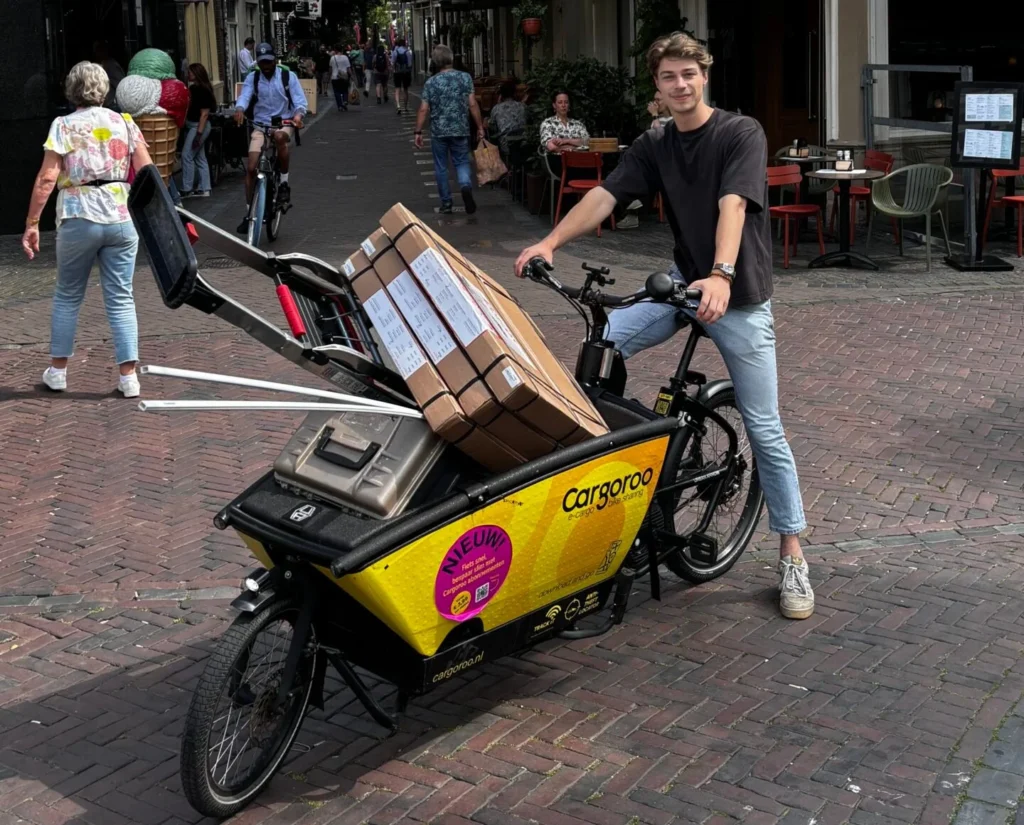
Into the city center by cargo bike
For an installation in Utrecht city centre we ran into something practical. A work van in such a busy city mainly causes hassle: little space, lots of cyclists, hardly anywhere to load or unload. So we did it differently. We hired a cargo bike and used it to bring the tools and the infrared panels to the site.
Heating where it is needed
This project was about a shop's staff canteen. A place where people do not sit all day, but where it does need to be pleasant at the moments it is used. Instead of heating the whole building, we chose infrared panels that give targeted heat in the place and at the moment it is needed. They are silent and give radiant heat without air movement.
Keeping the future in view
The installation was chosen so it can grow with the shop's ambitions. If solar panels are installed in the future or extra control is wanted, we will look at how the infrared panels can be linked to a wider energy system. That keeps the solution flexible, even when the situation changes. Not everything has to be done at once. Becoming more sustainable can also happen in steps.
How we work
Smarter energy use
On every project we look at how to limit energy use without giving up comfort. We choose systems that only run when needed, with smart switching, sensors or zone control. That way you do not heat for nothing.
Sustainable design and installation
We do not install things "because we can", but because they add something. That means: no excess of devices, but well-considered choices. Our solutions are matched to the situation, with an eye for service life and low maintenance.
Reuse where possible
We first check whether existing installations can be extended or reused. Whether it is cables, sensors or control components: if they can be integrated safely and efficiently, we do it. That saves materials and costs.
Expandable later
We build systems that can grow. By using open standards and a modular set-up, our installations can often be extended or adapted later. What is possible, we discuss beforehand.
Choosing brands with a vision
We do not work sustainably on our own. Our impact also depends on the choices we make about who we trust as partners.
Where possible we choose parties within Europe. Such as Qbus, a Belgian company that produces its own home automation. Or Ecaros, a manufacturer of infrared panels with German roots. And Homey from the Dutch company Athom, which makes smart control accessible and local.
We do not choose the cheapest party, but brands and people who share our approach.
Every step counts
Whether it is smart heating, energy management or home automation: we think along, ask sharp questions and look for a solution that suits your situation. We work in homes and commercial buildings.
Get in touch.
Read more: our projects, infrared heating and about Bluefeed.