
Plug-in home battery
We connect your plug-in home battery to its own circuit in the fuse box. After inspection it can then deliver more than through a normal socket, and you can use your solar power in the evening too.
A plug-in battery belongs on its own circuit
The Marstek Venus E 3.0 is limited to 800 watts as standard. For more, up to 2.5 kW, the manufacturer requires its own circuit plus inspection and approval beforehand.
For this we fit a type B RCBO, a dedicated cable and a wall socket with only the battery on it.
Own circuit in the fuse box
A type B RCBO, a dedicated cable and a dedicated wall socket. An isolator switch goes next to the battery.
Cable to shed, storeroom or attic
If the battery is not next to the fuse box, we run a cable to the shed, storeroom, attic or an outdoor spot.
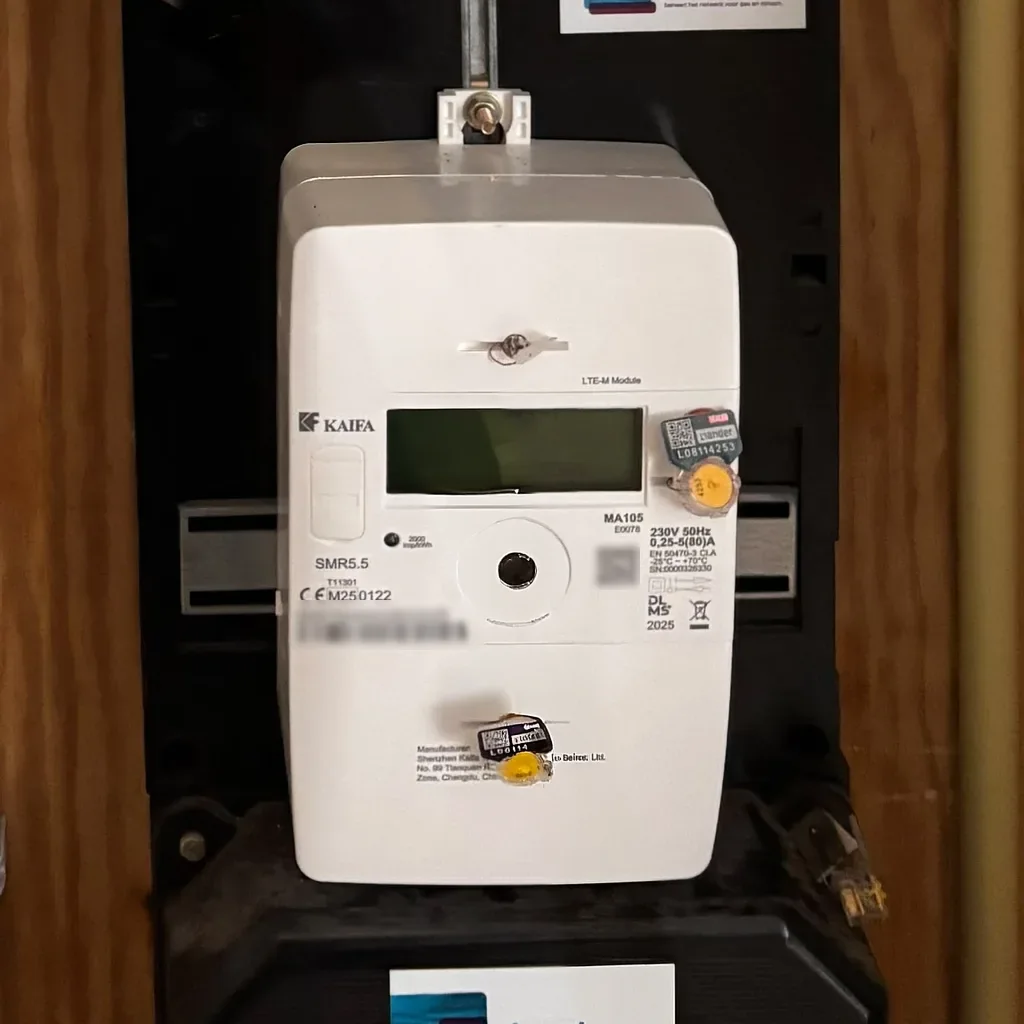
Linked to your smart meter
With a P1 meter the battery charges from your surplus and supplies power when your home needs it.
Not sure whether a plug-in battery suits you?
Answer a few short questions. Then you see whether a plug-in battery suits your home and which photos we need.
When does a plug-in battery fit?
Alongside your solar panels
The battery works alongside your existing installation; your inverter stays where it is. Without solar panels is fine too.
Also with three phases
A plug-in battery also works with a three-phase connection. How many batteries you need depends on your usage; each battery gets its own circuit.
Indoors or in the shed
A shed or storeroom is possible if the model is suitable for it. If you use more than about 5 kW for long periods in the evening, we first calculate whether a plug-in battery is enough.
How it works
1. Request with photos
Fill in the request form, with photos of your fuse box, your smart meter and the spot where the battery will go.
2. Quote
Using your photos we check what is needed and prepare a quote. If anything is missing, we will contact you.
3. Installation
We fit the dedicated circuit, the cable and the wall socket, and link the battery to your smart meter.
4. Inspection and release
We test the new circuit and you receive the test report. Above 800 watts we only release the power once the manufacturer's requirements are met. You then register the battery via energieleveren.nl.
Is your question not among them?
Our FAQ page has more answers, including on maintenance and other smart controls.
Is your question not listed? Send your request with photos, or email contact@bluefeed.nl.
What is the difference with a fixed home battery?
A plug-in battery has its own inverter and sits alongside your existing installation. Your solar panels and inverter stay as they are; we install a dedicated circuit with a wall socket.
A fixed home battery is wired permanently into your installation. Some systems have their own battery inverter, others share a hybrid inverter with your solar panels.
How much power can I store?
A Marstek Venus E 3.0 has 5.12 kWh, of which about 4.6 kWh is usable. In practical tests the round-trip efficiency of charging and discharging is between 79 and 85 per cent.
Why not just use a normal socket?
The Venus E 3.0 is limited to 800 watts as standard, and on a normal socket it shares the circuit with other appliances. On its own circuit it delivers up to 2.5 kW, after inspection and approval in line with the manufacturer's requirements.
Do I have power during a power cut?
Limited. The Venus E 3.0 has a socket on the battery itself for backup power, up to 2.5 kVA. Your home does not switch over automatically.
Do I need to register the battery?
Yes. You register the battery yourself with your grid operator via energieleveren.nl. We show you how at handover.
Does the 0 per cent VAT rate also apply to the battery?
No. You pay 21 per cent VAT on a home battery.
Does a home battery pay off after 2027?
Net metering (salderen) ends on 1 January 2027. Whether a battery pays off depends on how much power you feed back, your feed-in costs and your energy contract. With your usage and feed-in we work it out for you, just like in our energy advice.
Do I need solar panels?
No. Without solar panels the battery can charge when power is cheap, for example with a dynamic energy contract.
What do I need to arrange for the wifi?
Make sure you have good wifi (2.4 GHz) at the fuse box and where the battery goes. A network cable is even better, but good wifi is still needed in both places. We measure it on the day.
Does it work with Home Assistant?
Reading and control can be done locally, via Modbus TCP or the open API. Whether it works well depends on the battery's firmware.
What warranty do you offer?
The installation we carry out has a 12-month warranty. If you buy the battery from us, you can come to us for the statutory guarantee; the manufacturer's warranty comes on top of that. Your statutory rights still apply.
Handed over with a test report
We test the new circuit at handover and you receive the test report.