Short answer: electric driveway heating limits snow and ice on a driveway, path or outdoor staircase using heating cables under the paving. Sensors check whether it is cold and wet at the same time; only then does the system switch on, and it switches off again by itself. For a sloping driveway, a care location or a business site it is more a necessity than a luxury; at home it is mainly about convenience and safety. Updated 26 October 2026.
A slippery driveway is not just inconvenient, it can also lead to dangerous situations. Especially for homes with a ramp or business sites with daily traffic, ice is a real risk. That is why more and more people choose driveway heating: a solution that looks like a luxury at first glance but often turns out to be a necessity. In this article we explain how driveway heating works, when it makes sense, what it costs and what to look out for during installation.
Why choose driveway heating?
In snow or freezing moisture a sloping driveway can become slippery. In care homes, hospitals or logistics centres this is unacceptable: ambulance ramps, wheelchair access and loading bays must remain accessible even in snow and ice. For private homes too, a heated driveway can remove risks and time-consuming chores such as shovelling snow or gritting. There is an investment to make; what you get in return is safety, comfort and less salt on the paving.
Road salt is not harmless either. It attacks paving, joints and metal, washes into the garden and is harmful to plants and pets. With a heated driveway, gritting is usually unnecessary and the surface can stay frost-free without chemicals. It also reduces the risk of injury from slipping, which matters for older residents and in public places.
How does a heated driveway work?
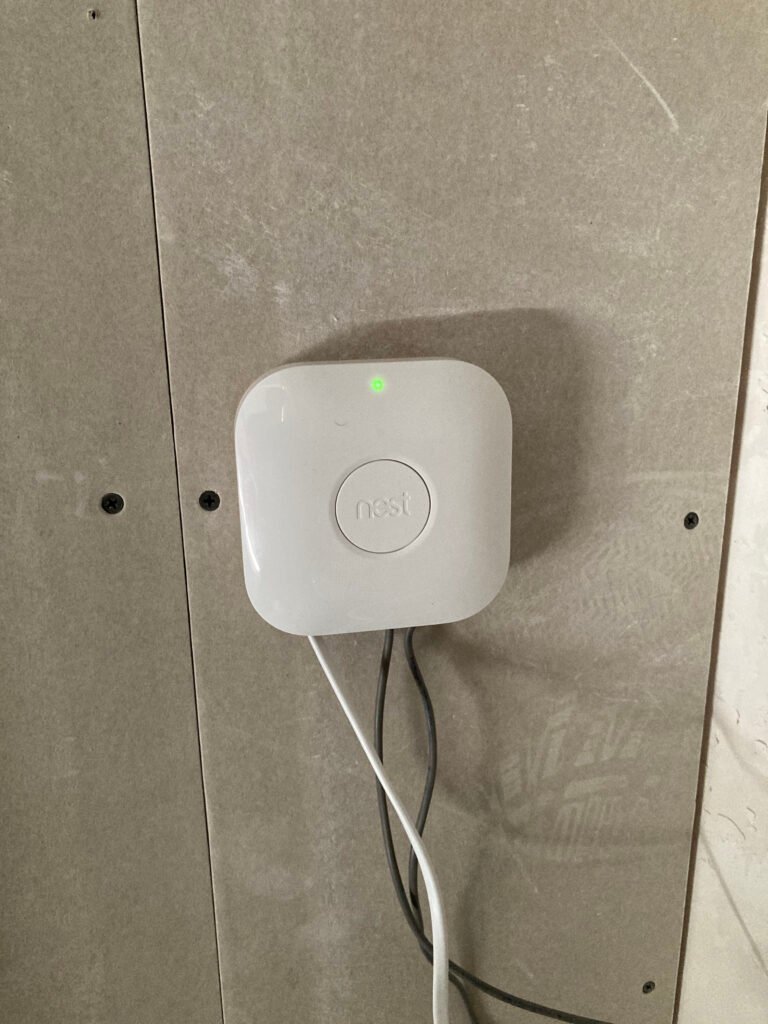
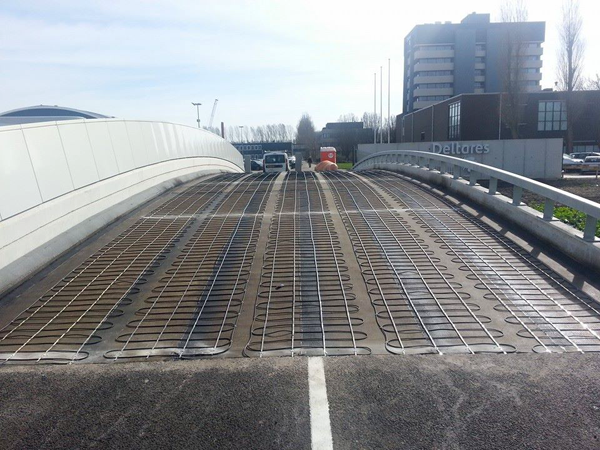
Heating cables or pipes are laid under the driveway. Sensors continuously measure temperature and moisture. As soon as ice threatens, the system switches on automatically and warms the surface. Once the surface is dry again, it switches itself off. Thanks to this control the system only runs when it is really needed.
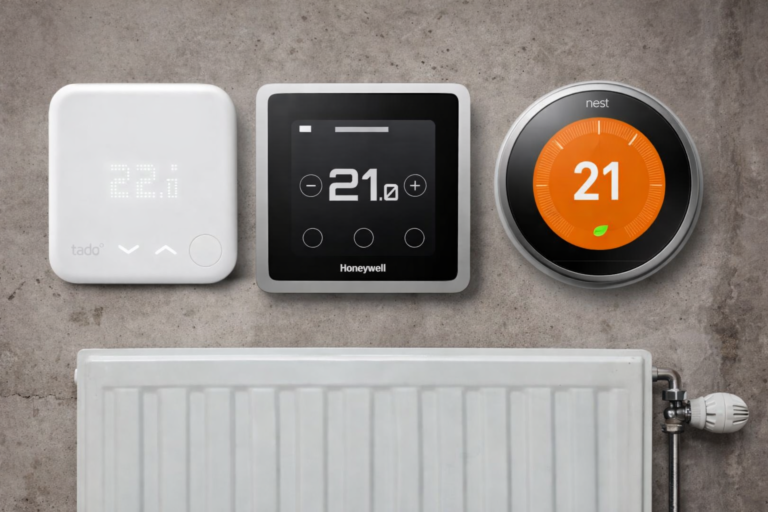
The combination of a moisture sensor and a temperature sensor is important here. Heating only makes sense when it is cold and wet at the same time; in dry frost or in rain above zero the system does not need to run. A good controller prevents unnecessary heating, which makes the difference between an economical and a wasteful system.
- Power of an electric system: around 300 to 400 W per m², only during the hours it is switched on
- The power per m² depends on the surface and the location; we calculate it for each situation
- Energy use: limited by the sensors and the short running time
Electric or water-based: which system suits you?
Broadly there are two types of driveway heating. The surface area, the ground and the available heat source play an important role in the choice. Bluefeed installs electric systems.
Electric driveway heating
Electric systems use heating cables or mats laid in the paving or the sand bed, on an insulation board so the heat goes upwards. They are relatively simple and quick to install, need little maintenance and suit smaller areas such as a private driveway, a path or a ramp. The drawback is that electricity use can add up on large areas, although the short running time keeps it limited. Indoors, the same technique works as electric underfloor heating.
Water-based driveway heating
In a water-based system, heated water flows through pipes under the surface, often driven by a heat pump or central heating installation. This is more energy-efficient for large areas, but installation is more complex and the system needs more maintenance. For business premises, car parks and large driveways, this is usually the logical choice.
Applications of driveway heating
The technology can be applied widely, both at homes and in the public and business sector:
- Homes with steep driveways: can limit the risk of slipping and frost damage.
- Car parks with ramps: easier to access for visitors in snow and ice.
- Care facilities and hospitals: safe access for ambulances and patients.
- Distribution centres and business sites: can limit delays and the risk of accidents.
- Apartment complexes: more comfort for residents and visitors.
- Stairs and footpaths: reduces the risk of falls where many people walk.
What does it cost to install driveway heating?
As an indication (October 2026), the cost of an electrically heated driveway is between € 50 and € 150 per m² including installation, depending on the area and the ground; a heated outdoor staircase starts from € 100 per flight. The exact price follows after the survey. Water-based solutions combined with a heat pump are more energy-efficient but need more maintenance.
When estimating the total cost, more factors count than just the price per square metre. Think of whether existing paving needs to be broken up, the distance to the consumer unit or heat source, the control technology needed and the finish. A new-build situation or planned re-paving is therefore often the best moment to install driveway heating, because the work can then be done in one go.
Thanks to the automatic control and the relatively short running time, energy costs stay limited. If you have solar panels or an energy management system, the system can run on your own power at the moments when there is enough of your own generation while heating. Want to know more about such a link? Then also read our article on a future-proof smart energy system.
Maintenance and lifespan
In a well-installed system the heating elements lie protected under the surface and are not exposed to the weather. With an electric system, maintenance is limited: check the condition of the sensors and the visible cables and connections every year, and keep the surface free of dirt and heavy objects. With water-based systems, periodic checks of the pump, expansion vessel and fluid are advisable.
The main point of attention is not the system itself but the installation: a wrongly laid cable or a badly adjusted sensor is hard to correct afterwards. Incorrect installation or adjustment is difficult to fix later; that is why you leave the design and installation to a specialist.
The Bluefeed approach: smart, tailored technology
At Bluefeed we start with a survey: on site, or digitally with your photos and measurements. Based on that, together with our team and our regular installation partner, we work out an electric system that suits your driveway, path or stairs, with sensors and controls; we choose the cables, sensors and controller for each situation. If you have solar panels or an energy management system, we look at whether a link is possible in your situation.
Frequently asked questions about driveway heating
Does driveway heating use a lot of electricity?
The system only works when it is cold and wet at the same time. While heating, an electric system draws around 300 to 400 W per m²; thanks to the sensors and the short running time, consumption stays limited to the real winter days.
Can driveway heating be installed afterwards?
Yes, but then the existing paving has to be lifted to place the cables or pipes. That is why it is the least work to include driveway heating during a new build or planned re-paving.
Does it work under all types of paving?
Driveway heating can be used under concrete, paving bricks, tiles and asphalt. The output needed does differ per material, because heat conduction is not the same everywhere. A proper output calculation beforehand is therefore important.
Conclusion: in many cases not a luxury, but a logical choice
Driveway heating is an investment in safety, convenience and sustainability. Especially for ramps, care locations or business sites where accessibility is crucial, it is more a necessity than a luxury. But for anyone who values comfort and convenience it is a practical solution too: less ice and no road salt. Considering a heated driveway, path or staircase? Get in touch, and we will look at your situation. Want to heat indoors electrically without a boiler? Then read our blog on electric underfloor heating without central heating.
Sources: product information and frequently asked questions on driveway, road and staircase heating from our installation partner (website, read 26 October 2026; name on request): operation with snow and ice detection, power of 300 to 400 W per m² during use, cost indication per m² and per flight of stairs, insulation under the system, annual check of sensors and cables.