Short answer: electric underfloor heating works without a central heating boiler, pipes or manifold. A thin heating cable or mat sits in the tile adhesive, the levelling compound or the screed and is permanently connected via a thermostat with a floor sensor. In a bathroom or small room it is often supplementary heating; whether it can be the main heating depends on the insulation and the free floor area. Updated 25 October 2026.
Electric underfloor heating without central heating is a way to heat a room without a hot-water system. By “without central heating” we mean without water-based central heating, so without a boiler, pipes or manifold. This type of heating is fully electric and separate from any hot-water system. That makes it possible in situations where there are no heating pipes and none will be laid.
Think of a small bathroom without a radiator, a flat without a central heating connection, or a renovation where you do not want major demolition work. In this article, we explain when this electric solution is a smart choice, how the system works and what applications are possible.
Why choose electric heating without central heating?
If a room has no heating pipe and you do not want to lay one, electric heating is an alternative.
Suitable for homes without a boiler
Think of an outbuilding, a flat without a central heating connection or a room no heating pipe runs to. There, an electric system can heat the room without new water pipes.
Heating without major building work
An electric system goes directly onto the existing subfloor, provided it is flat, dry, clean and suitable. Under laminate or parquet a heating foil can be laid without breaking, chasing or milling; under tiles or a poured floor the cable or mat goes into the tile adhesive or levelling compound.
Comfort without visible radiators
Radiators take up space and shape how a room looks. With heat coming from the floor, everything stays out of sight.
When is electric underfloor heating without central heating a smart solution?
This way of heating works especially well in rooms where comfort matters and the floor area is limited.
Heating a bathroom without central heating
Electric underfloor heating can be used in a bathroom. There you want quick warmth, a pleasant floor and no radiator in view. In a bathroom it is often supplementary heating, because no heating goes under the shower tray, bath or fixed cabinets.
Suitable where floor build-up height is limited
In many homes there is little room to raise the floor. A heating mat is about 3 mm thick and disappears into the tile adhesive. Loose cable in levelling compound gives a build-up of about 6 mm. That keeps the floor build-up low.
Renovating existing homes
In a renovation the subfloor is not always suitable for milling in pipes. An electric floor system can also go onto an existing subfloor, provided it is flat, dry and clean and suitable for the chosen system.
How does an electric underfloor heating system without hot water work?
Want to know more about electric underfloor heating? See our page on electric underfloor heating. With this way of heating, heating elements convert electricity directly into heat. No hot water, boiler or pipework is involved. This keeps the installation simple and flexible.
Heating mats for standard rooms
Electric mats have a fixed cable spacing. They suit a bathroom or toilet.
Custom work with loose heating cables
For more freedom we use loose heating cables. With these we lay the cable route on the free floor, at a fixed spacing. No cable goes under fixed cabinets, a shower tray or a bath.
More applications than just underfloor heating
The flexibility of electric systems makes more possible than just heating the floor.
Wall heating and heated shower walls
Electric heating can also sit in a free wall area, for example in the bathroom next to the shower.
Stair heating
Electric heating can also be fitted in a staircase. Whether that works for your stairs depends on how the treads are built.
Driveway heating and outdoor solutions
We also use electric heating outdoors, for example in driveways and paths. This needs its own insulation board and build-up.
Electric heating combined with solar panels
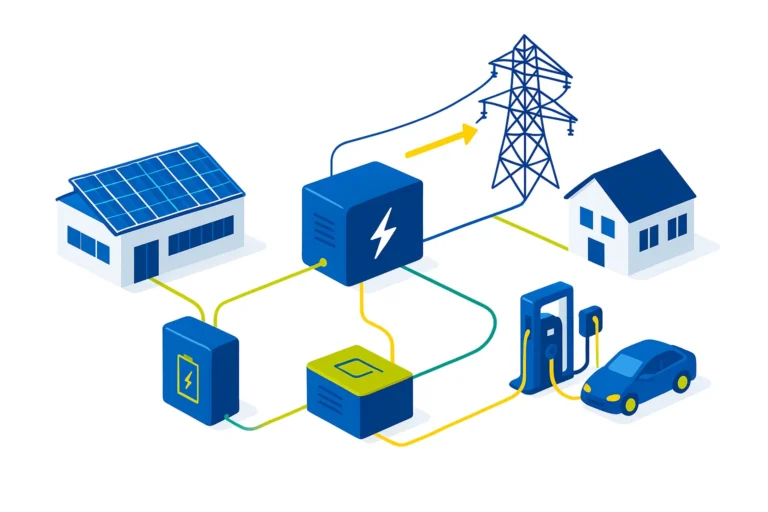
Electric underfloor heating runs on electricity. You set on the thermostat when the floor heats.
On our page about sustainable energy solutions you can read more about solar panels and energy management.
When is this solution less suitable?
Electric heating is not suitable for every situation.
Large and poorly insulated rooms
For large areas in poorly insulated homes this solution is usually less suitable as main heating. How much power a room needs follows from its insulation and size; there it can become too much.
Without proper design and calculation
Without a power calculation the comfort can disappoint. That is why we work out the power per room in advance.
Frequently asked questions about electric underfloor heating without central heating
Can electric underfloor heating without central heating be my main heating?
That depends on the insulation, the free floor area and the power per square metre. In a bathroom it is often supplementary heating. In large or poorly insulated rooms it is wiser to use it as supplementary heating or to improve the insulation first.
Is electric underfloor heating expensive to run?
Consumption depends on the insulation, the floor area and how often you heat. With solar panels you generate part of the electricity yourself.
Is it suitable for a bathroom?
It can, if there is enough free floor and the subfloor is suitable. A heating mat in the tile adhesive heats the floor without a central heating connection. The mat goes on the free floor, not under the shower tray or bath, and is installed in line with NEN 1010 with a residual current device.
Does underfloor heating without central heating raise the floor much?
The mat itself is about 3 mm thick and disappears into the tile adhesive; loose cable with levelling compound gives a build-up of about 6 mm. If a new screed is laid, the cable goes into it.
Having electric underfloor heating without central heating designed and installed
At Bluefeed we work out the power per room, based on insulation and use. We lay cable or mat on the free floor and test the heating before, during and after laying. Read more on our page about electric underfloor heating or do the underfloor heating check. If you do have central heating and want to control the upper floor separately, read about heating upstairs with underfloor heating; for outdoors, read more in our blog about driveway heating.
Sources: Alma Techniek, almatechniek.nl (electric underfloor heating, floor insulation, installation) and brochure on electric underfloor heating: build-up, foil, power per room, method and testing; Henco, installation manual for electric underfloor heating mats p.2-4: 3 mm mat in tile adhesive, free floor, bathroom often supplementary heating, NEN 1010; Etherma, installation instructions MH Prefix p.1-4: cable in screed.