How do you get young people involved in an energy cooperative? Short answer: make taking part small and flexible, speak their language and use their channels, offer something to learn, choose projects close to their lives and give real responsibility. Below are five ways, with the questions we hear about them. Updated 27 October 2026.
This article is for energy cooperatives and their members. A cooperative can check whether young people are represented well enough. They will live with the choices made now, so it can pay to bring them in.
Give young people room to use their ideas and digital skills. The question is how you really get them on board.
Why involving young people matters right now
If a cooperative runs on a fixed core of volunteers, that gives stability, but also a risk if that core gets smaller. So ask yourself: who takes over the work when the current volunteers stop? And who will represent the cooperative in talks with the municipality, residents and financiers?
Why young people drop out of energy cooperatives
As a cooperative, take a critical look at your own model. Does a project require owning a home or a long term? Then a tenant or someone who is moving soon may drop out. Is the entry amount high, or is the communication full of technical jargon? That can be a barrier.
Also ask how much time a role takes. Not everyone can manage a board role or a fixed meeting evening. So also offer ways to contribute flexibly and concretely, alongside the evening meeting in the community centre.
Five ways to really involve young people
1. Make taking part easy
Offer low entry amounts, short project terms or flexible forms of participation. Give young people room to take part on a project basis, without immediately attaching board responsibility to it. Think of a one-off contribution from a small amount, or the option to commit to one clearly defined project instead of for years.
2. Speak their language and use their channels
Use clear, visual communication. Use social media and young ambassadors to tell the cooperative's story, and show young people that their contribution really counts. Consider a short video or a clear infographic alongside longer information.
3. Create learning opportunities
Think of internships, traineeships or volunteer roles in which young people gain work experience in the energy world. Link your cooperative to schools, universities or start-ups to make that connection lasting. For young people, the chance to learn something and strengthen their CV can be a reason to take part, alongside the return.
4. Connect projects to their world
Where possible, choose projects that connect to their neighbourhood, mobility, affordability or technology. A solar project on a student flat or a charging square at a sports club is closer to their lives than a project far away. Make the impact tangible and local.
5. Give responsibility and recognition
Don't let young people just 'look on', let them really take part. Give them a role in communication, decision-making or technology, and let their ideas lead in projects that affect them. Offer recognition, their own responsibility and a clear view of the result.
The role of digital participation
Part of the difference lies in how you let people take part. Consider online membership, digital voting and a clear dashboard, alongside the meeting.
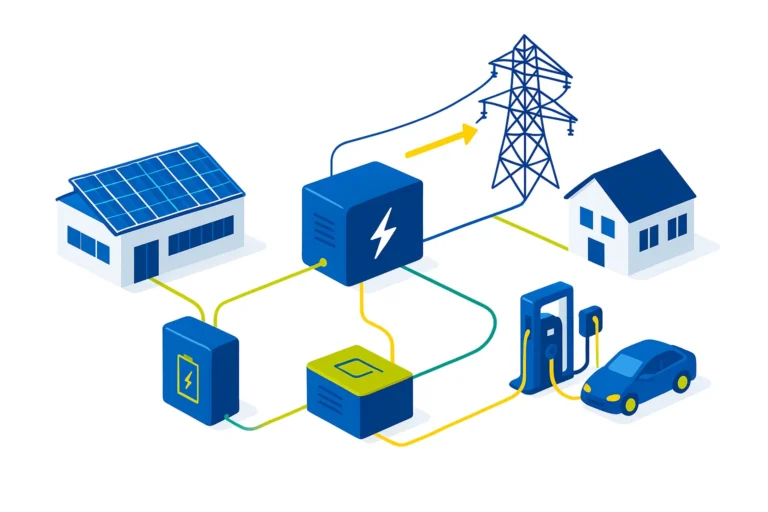
Sharing electricity also goes through such a route. Energy sharing means that the solar power you feed back is used by someone else in the same quarter of an hour. This runs via your energy supplier, a market party or a cooperative, and it can involve costs. A change in the law that makes sharing between customers of different suppliers possible is expected in the first half of 2027 (source: Solar Magazine, 24 October 2026). How local sharing works for businesses is explained in EnergyHub for businesses.
Why this works for cooperatives and young people
A cooperative can involve young people in ideas and plans for the future. That gives young people the chance to learn, help decide and do something tangible in their own neighbourhood.
Frequently asked questions
Can you join an energy cooperative if you rent?
That depends on the cooperative and the project. A project on a roof elsewhere, for which you don't need your own roof, or a membership without a fixed term can also work for tenants. Ask the cooperative in your area.
Do you need to put in a lot of money to take part?
That differs per cooperative and per project. A cooperative that wants to attract young people can choose a low entry amount and flexible participation, so the barrier stays small.
Conclusion: young people are not a target group, but co-owners of the future
If a cooperative wants to stay lively, it helps to see young people as full partners and not as a symbol. Give them room and responsibility. How the energy transition takes shape at home is explained in our article on a future-proof smart energy system. What we do with solar panels, batteries and smart control is described under sustainable energy solutions and energy advice and implementation.